Visa and Mastercard Are Building the Rails for Agentic Commerce
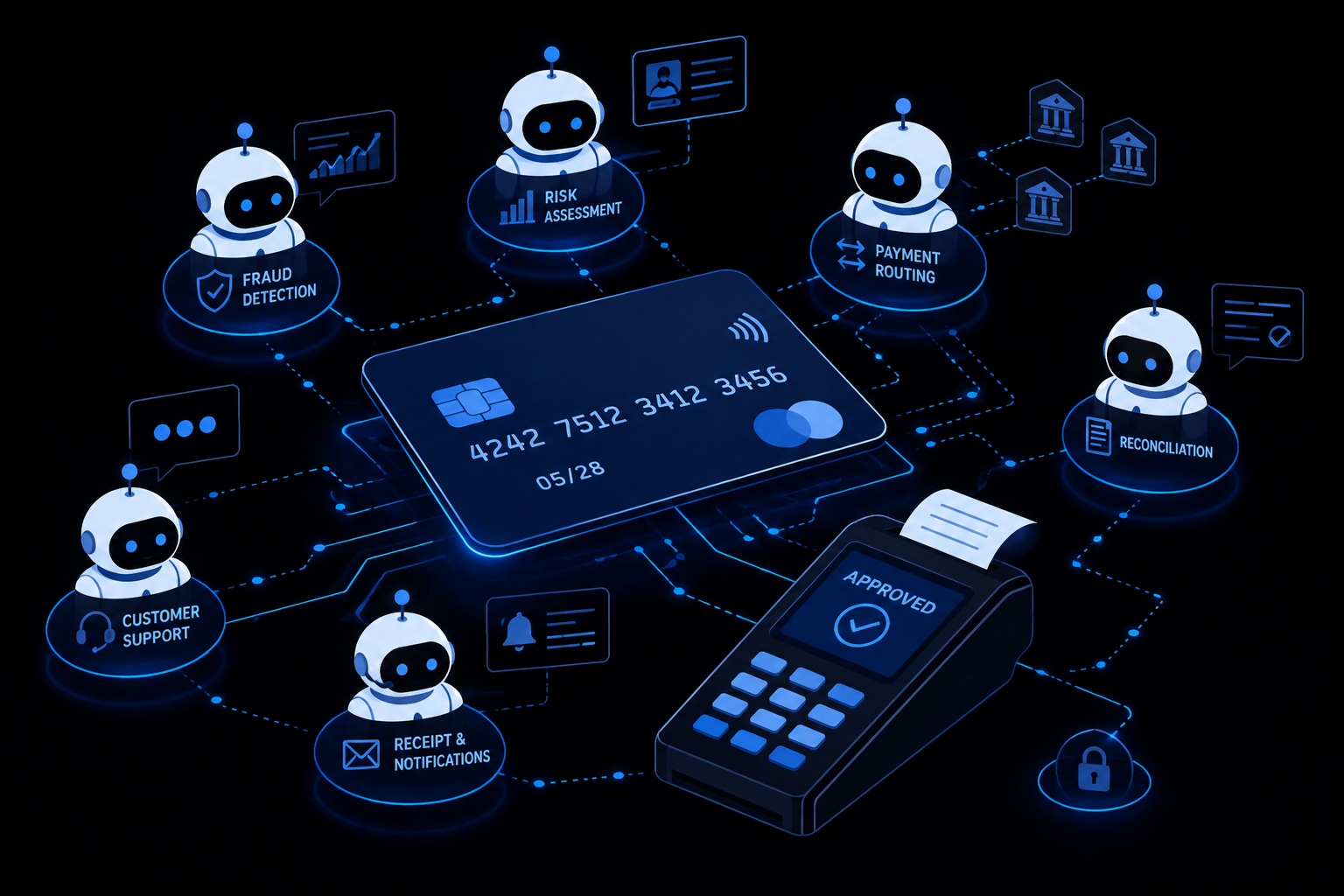
When Visa and Mastercard move in the same direction at the same time, the payments industry listens. In early April both networks announced significant agentic AI expansions that signal a fundamental shift in how transactions will be authorised and executed in the near future.
Visa deployed AI to handle payment disputes and automate corporate bill payments through a new partnership with Ramp. Mastercard, meanwhile, expanded its agentic payments network to Hong Kong, part of a stated ambition to build international infrastructure specifically designed for AI-to-AI commerce — transactions initiated and completed by agents acting on behalf of humans.
That last phrase deserves to sit with you for a moment. AI-to-AI commerce. Not a human instructing an AI to make a purchase. Two AI systems negotiating, authorising, and settling a transaction between themselves.
For business leaders the practical implications are immediate. Expense management, procurement, and supplier payments are the obvious first targets — workflows where the decision rules are clear enough to delegate entirely to an agent. Both Visa and Mastercard are betting that enterprises will want this capability at scale, and they are building the infrastructure now.
The deeper question is one of trust and liability. When an agent makes a purchase that turns out to be fraudulent, erroneous, or simply wrong — who bears responsibility? The card networks are positioning themselves as the answer to that question, embedding governance and dispute resolution directly into the agentic payment layer.
The race to own the financial infrastructure of the agentic economy has quietly begun.