The Agentic Economy Needs Legal Infrastructure. Norm AI Is Trying to Build It
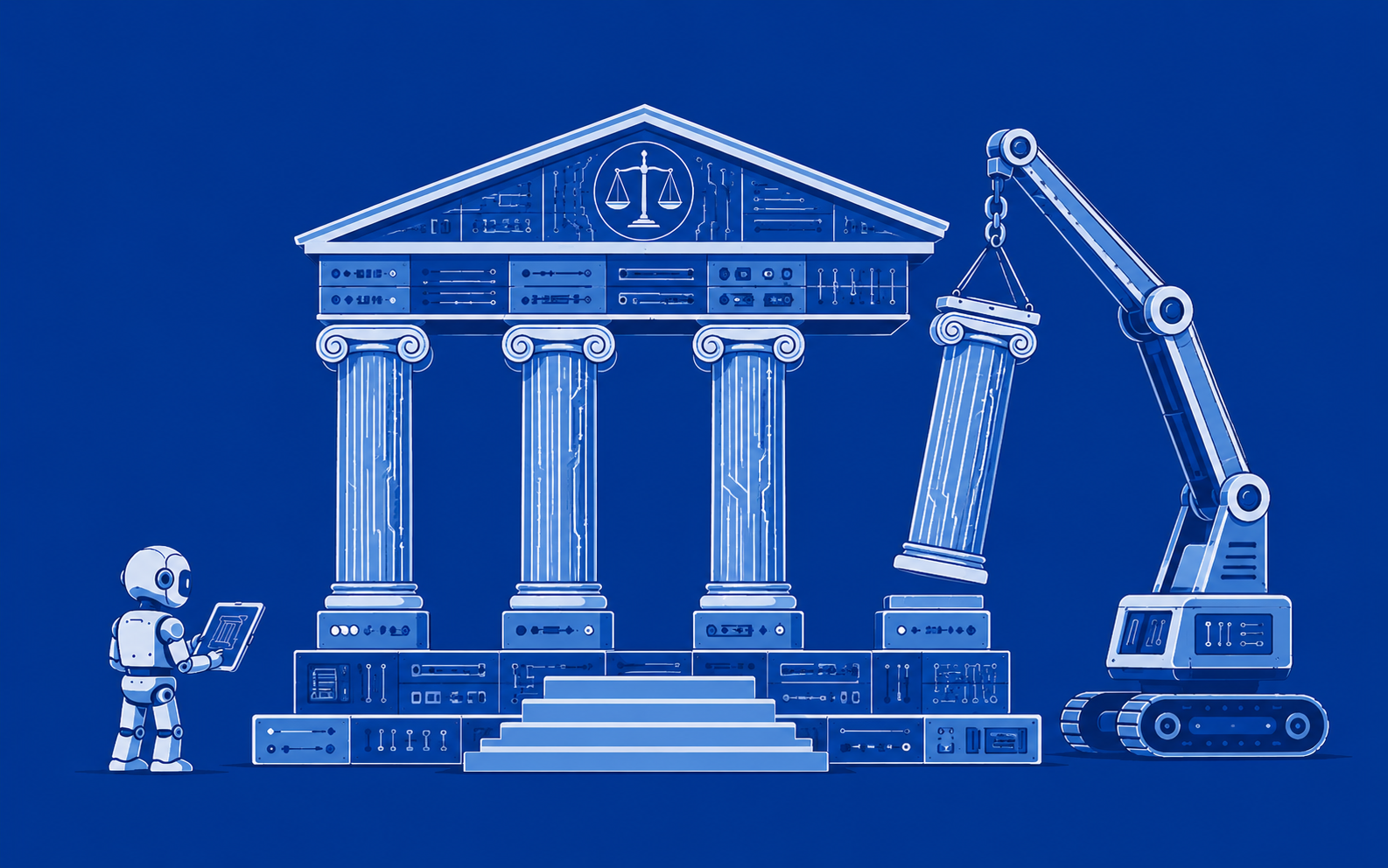
When an AI agent negotiates a contract, makes a compliance determination, or executes a financial transaction on behalf of an institution, a question that sounds philosophical becomes immediately practical: who is legally responsible for what it did?
Courts and legislators have not yet resolved this. Existing liability frameworks were built on the assumption that human decision-makers stand behind consequential actions. Agentic AI is systematically dismantling that assumption. The more autonomous a system becomes, the harder it is to attach responsibility to any particular actor. Legal scholars call this the “AI accountability gap.” It is not a theoretical concern. It is already showing up in boardrooms, compliance functions, and courtrooms.
Into this gap steps Norm AI, a New York-based legal technology company that this week launched the Legal AGI Lab — a research initiative focused on building what it describes as the legal infrastructure for agentic systems. The premise is straightforward, even if the execution is not: before AI agents can operate reliably in high-stakes environments, someone needs to do the underlying legal and theoretical work that defines what accountability looks like for autonomous systems.
Norm AI is not a newcomer. The company has spent several years building a “legal engineering” discipline — training lawyers from elite firms to convert regulatory obligations and corporate policies into executable AI agents. Its client base collectively manages more than $30 trillion in assets, with backers including Blackstone, Bain Capital, Vanguard, Citi, and TIAA. Total funding stands at more than $140 million.
The Lab’s research agenda covers questions at the edge of both law and computer science: what legal “intention” means when attributed to an AI system; how liability should be assigned when an autonomous agent causes harm through a chain of delegated decisions; and what architectural requirements would make agentic systems genuinely governable. Researchers are also evaluating the legal reasoning of agents already deployed inside Norm Law — an AI-native law firm the company operates — using a live environment as a test bed for questions usually treated as academic.
The timing reflects genuine regulatory pressure. The EU AI Act’s transparency obligations take effect in August 2026. The EU’s updated Product Liability Directive, due for implementation by December 2026, explicitly classifies AI as a product, opening the door to strict liability claims. In the US, the White House’s March 2026 AI policy framework signalled a federal preference for limiting developer liability while encouraging industry-led governance — a tension the Legal AGI Lab is positioning itself to define.
The commercial logic is transparent. A research lab that shapes how the law applies to AI agents also shapes the problem that Norm AI’s products exist to solve. The questions the Lab is asking are genuinely unsettled and consequential, but this is a well-capitalised company making a deliberate bet that whoever builds the legal frameworks for the agentic economy will be well-positioned to profit from the compliance requirements that follow.