OpenAI's Operator Agents Are Now Handling Real Business Workflows
Something crossed a threshold recently that has not received the attention it deserves.
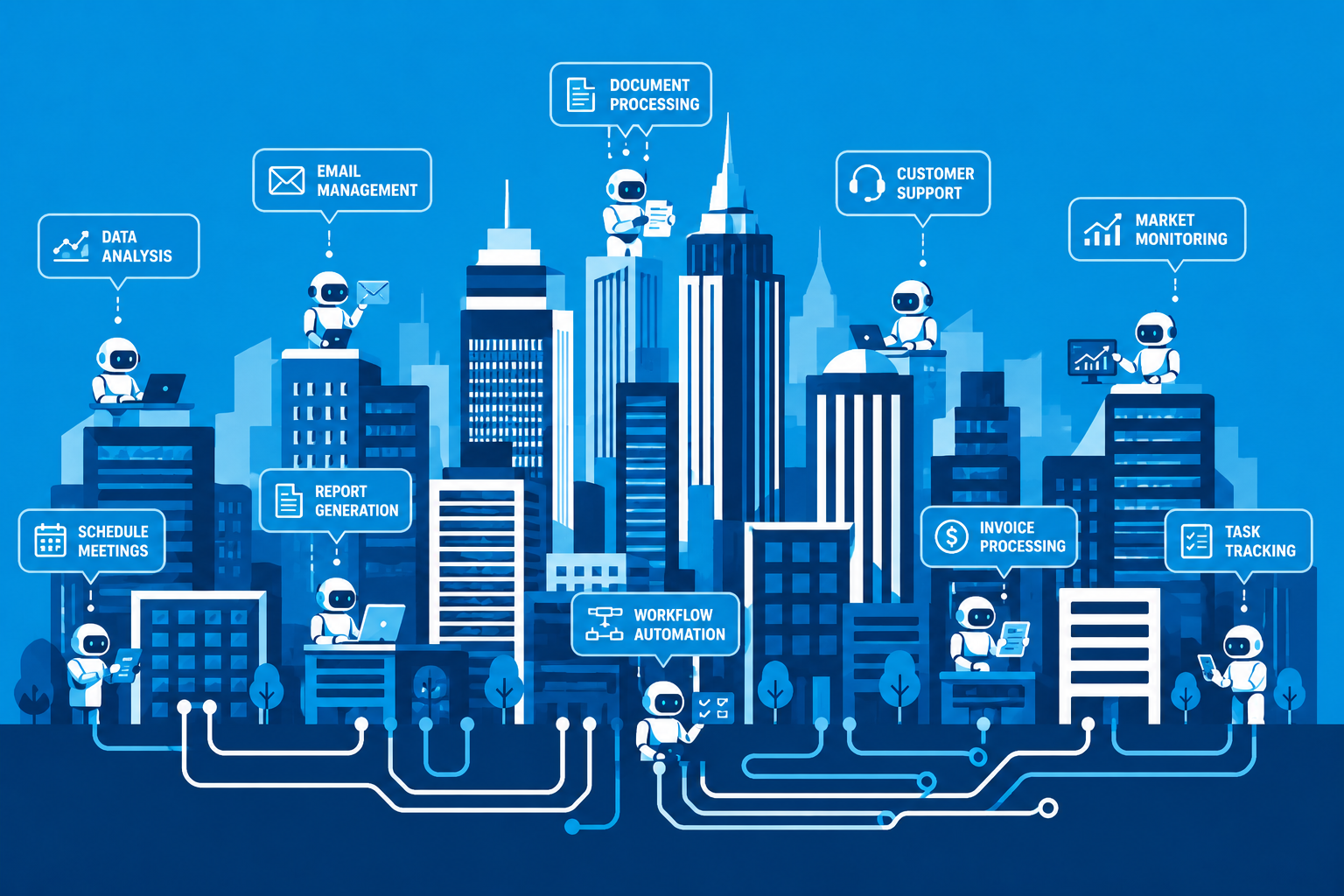
OpenAI’s operator-class agents — AI systems capable of taking actions inside software, not just generating text — are now running inside real enterprise environments. They are booking meetings, processing invoices, navigating internal tools, and completing multi-step workflows without a human confirming each action.
This is not a demo. It is not a pilot. It is production deployment at scale.
The distinction matters enormously. A conversational AI answers questions. An operator agent does things. It has access to tools, it can browse, click, type, submit, and iterate. It can work for hours on a task and return with a completed outcome rather than a suggested next step.
For business leaders, the implications land in three places immediately.
Workforce planning changes overnight. The question is no longer whether AI can assist your team — it is which workflows no longer require a human in the loop at all. That is a harder conversation, but an unavoidable one.
Liability and oversight become urgent. When an agent submits a form, sends an email, or executes a transaction, who is accountable for errors? Legal and compliance teams are only beginning to grapple with this. Most organisations are not ready.
The competitive gap will widen fast. Companies deploying operator agents today are compressing task completion times by an order of magnitude in specific workflows. Those that wait another twelve months to evaluate will be playing catch-up against rivals who have already restructured around autonomous AI.
The age of the AI assistant is giving way to the age of the AI agent. The Agentic Times exists to document exactly that transition — clearly, critically, and without hype.
This is dispatch one.