Only 1 in 5 firms are Ready for Autonomous Agents
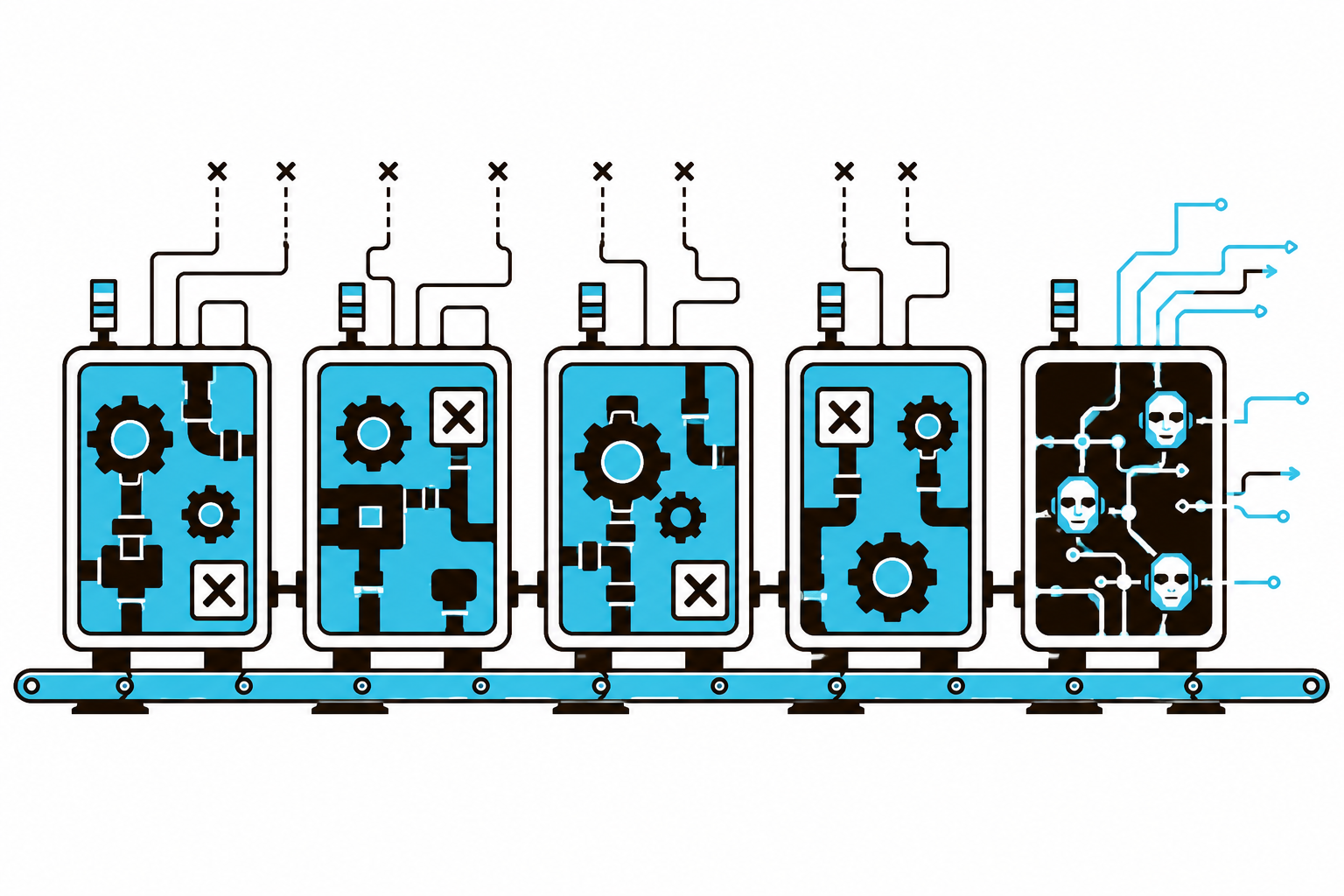
Nearly two thirds of business leaders expect most of their AI agents to run autonomously within four years, with humans mainly watching from the sidelines. Only 1 in 5 say their organisation is actually ready to redesign processes to make that happen.
Deloitte surveyed more than 500 senior leaders across five industries to find out why. Three barriers dominate. 72% point to a lack of unified, accessible data. 70% say they can’t yet trust or govern their agents. 67% cite the cost and complexity of integration.
None of these are workforce resistance or a change management problem. They’re structural. An agent can’t reason well across a business it can’t see clearly, and most enterprise data still lives in silos that were never built with agents in mind. Trust and governance rank almost as high, which lines up with what we’ve covered before on this front: most organisations still can’t reliably trace what an agent did or roll it back when something goes wrong.
Here’s the finding that should worry anyone assuming this gets easier with maturity. Even among organisations running scaled, orchestrated multi-agent systems, only 46% say their business processes are actually prepared for it. That’s less than half, at the most advanced stage of adoption most companies have reached. Getting agents into production doesn’t mean the underlying data, trust, or integration problems are solved. It just means you’re running into them at a bigger scale.
There’s a cost dimension too, one that barely gets discussed outside finance teams. Deloitte flags a genuine tension organisations are only starting to grapple with: balancing spend between workers and tokens. Every dollar shifted toward agent infrastructure is a dollar not spent on the people meant to supervise, correct, and work alongside those agents. Half of leaders admit their organisation isn’t investing enough in the workforce transformation this shift actually requires.
Most organisations are dealing with all this by layering, bolting AI agents onto existing processes rather than redesigning them. It’s understandable. Redesign is expensive and slow, and layering shows quick ROI. But Deloitte’s own interviewees are candid that layering caps out. It gets efficiency gains. It doesn’t get the cross-functional, autonomous coordination that 58% of leaders expect to need within four years.
The uncomfortable read across all of it: the barriers to agentic autonomy aren’t cultural reluctance or fear of change. They’re the unglamorous infrastructure work, clean data, real governance, honest cost accounting, that most organisations have been putting off. Autonomy was never going to be the hard part. Earning the right to trust it was always going to be.